
Sunday, December 31, 2006


2006 Year in Review

|
Topic |
|
|
|
|
|
|
|
|
|
|
|
|
|
|
Friday, December 29, 2006
Lucille Speeter, 91, had a keen sense of fashion, style
She also was a Vietnam War opponent and founding member of Women Against Military Madness.
By Dan Wascoe, Star Tribune
Last update: December 28, 2006 – 9:15 PM
Even from her teenage years, Lucille Speeter conveyed a sense of style.
Soon after graduating from Minneapolis Central High School with no formal art training, she sketched ads and designs for Schlampp's, a well-known furrier. She once won a contest in San Francisco that sought ideas for decorating on a budget.
As recently as this year, she designed and served as general contractor for the conversion of a three-season porch to a year-round room, said Bob Speeter, one of her six children. She seldom went anywhere without coiffed hair and high heels, he added.
Speeter of Minneapolis died Tuesday at age 91 after complications from surgery after a fall. Behind her fashion sense was a firm commitment to peace and justice issues, said her daughter Cheryl Speeter Margoles. Her mother's early opposition to the Vietnam War led her and husband, Robert, to Paris in 1971 to meet with delegations from other countries about ending the war.
She was a founding member of Women Against Military Madness in the early 1980s, participating in protests and writing letters to newspapers and political figures, her daughters said. Her son Greg absorbed those sensibilities, and today is executive director of the National Priorities Project, based in Northampton, Mass. It seeks to use the federal budget to address social and economic justice.
Margoles said one of her mother's victories came when she won over her husband, a former FBI agent, on the Vietnam issue. But she did not possess a rabble-rousing personality, Margoles said. "She was quiet-spoken, very diplomatic, personally conservative and persistent," Margoles said. "She just felt this injustice."
Son Bob said those values played out among her children. She never played favorites, he said, and, "We never argue."
While she gave up her designing job to help raise her family, her artistic skills continued to play out at home, Margoles said. "She loved sketching and drawing rooms and furniture," she said. Daughter Patrice Beddor said her mother sometimes covered barrels with elegant fabric to create fashionable end tables. She also used to stay up late working on her children's art projects and costumes. "We won many awards throughout grade school" because of those efforts, she said.
The survivors include: Robert, her husband of 65 years; sons Richard of Orono, Bob of Minnetonka and Greg of Hatfield, Mass.; daughters LuAnne of Edina, Patrice Beddor of Dexter, Mich., and Cheryl Margoles of St. Louis Park, and 14 grandchildren.
Services are scheduled for 10 a.m. today at the Our Lady of Lourdes Church, 1 Lourdes Place, Minneapolis.
Dan Wascoe • 612-673-4436 • dwascoe@startribune.com
By Dan Wascoe, Star Tribune
Last update: December 28, 2006 – 9:15 PM
Even from her teenage years, Lucille Speeter conveyed a sense of style.
Soon after graduating from Minneapolis Central High School with no formal art training, she sketched ads and designs for Schlampp's, a well-known furrier. She once won a contest in San Francisco that sought ideas for decorating on a budget.
As recently as this year, she designed and served as general contractor for the conversion of a three-season porch to a year-round room, said Bob Speeter, one of her six children. She seldom went anywhere without coiffed hair and high heels, he added.
Speeter of Minneapolis died Tuesday at age 91 after complications from surgery after a fall. Behind her fashion sense was a firm commitment to peace and justice issues, said her daughter Cheryl Speeter Margoles. Her mother's early opposition to the Vietnam War led her and husband, Robert, to Paris in 1971 to meet with delegations from other countries about ending the war.
She was a founding member of Women Against Military Madness in the early 1980s, participating in protests and writing letters to newspapers and political figures, her daughters said. Her son Greg absorbed those sensibilities, and today is executive director of the National Priorities Project, based in Northampton, Mass. It seeks to use the federal budget to address social and economic justice.
Margoles said one of her mother's victories came when she won over her husband, a former FBI agent, on the Vietnam issue. But she did not possess a rabble-rousing personality, Margoles said. "She was quiet-spoken, very diplomatic, personally conservative and persistent," Margoles said. "She just felt this injustice."
Son Bob said those values played out among her children. She never played favorites, he said, and, "We never argue."
While she gave up her designing job to help raise her family, her artistic skills continued to play out at home, Margoles said. "She loved sketching and drawing rooms and furniture," she said. Daughter Patrice Beddor said her mother sometimes covered barrels with elegant fabric to create fashionable end tables. She also used to stay up late working on her children's art projects and costumes. "We won many awards throughout grade school" because of those efforts, she said.
The survivors include: Robert, her husband of 65 years; sons Richard of Orono, Bob of Minnetonka and Greg of Hatfield, Mass.; daughters LuAnne of Edina, Patrice Beddor of Dexter, Mich., and Cheryl Margoles of St. Louis Park, and 14 grandchildren.
Services are scheduled for 10 a.m. today at the Our Lady of Lourdes Church, 1 Lourdes Place, Minneapolis.
Dan Wascoe • 612-673-4436 • dwascoe@startribune.com
Wednesday, December 27, 2006
Jessica's Grandmother (Nonnie)

Lucille Magnhilde (Rekdahl) Speeter
Age 91, of Minneapolis. Preceded in death by her parents, Harold and Florence Rekdahl, and brother, Wallace Rekdahl. Survived by devoted husband of 65 years, Robert L. Speeter; children, Greg (Betsy) of Hatfield, Mass., Richard (Karen) of Orono, Cheryl S. (Alan) Margoles of St. Louis Park, Patrice S. (Brian) Beddor of Dexter, Mich., LuAnne of Edina, and Robert M. (Shanlee) of Minnetonka; brother Donald Rekdahl of St. Louis Park; and grandchildren, Barbara Speeter, Amy (Robert) Barnett, Abigail (Eric) Bielski, Lisa Speeter, Sarah Margoles, Daniel Margoles, Mark Speeter, Robert Beddor, Michelle Margoles, Jessica Belden, Meicyn Zierke, Olivia Speeter, Noah Speeter and Kysten Zierke. Having been an accomplished commercial artist and designer for Schlampp's Furriers, Lucille brought her artistic sensibilities into virtually every facet of her life. She was a dedicated worker for peace and justice, a founding mother of Women Against Military Madness, and volunteer for many charitable and religious organizations, including St. John the Evangelist and Our Lady of Lourdes churches. Lucille devoted herself to raising her family with fairness, intelligence and deep love, and will live on as an inspiration to us all. Mass of Christian Burial 10 AM Friday at The Church of Our Lady of Lourdes, 1 Lourdes Place, Mpls. MN. 55414. Interment St Mary's Cemetery. Visitation Thursday 5-8 PM with 7 PM rosary at Gearty-Delmore Park Chapel, 3960 Wooddale Ave S., St Louis Park and Friday at church one hour prior to mass. Memorials preferred to Our Lady of Lourdes Church, or National Priorities Project, 17 New South Street., Northampton, MA, 01060. Gearty-Delmore 952-926-1615
Star Tribune Actual Article
Tuesday, December 26, 2006
Christmas 2006
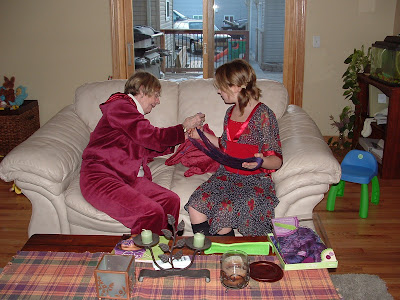
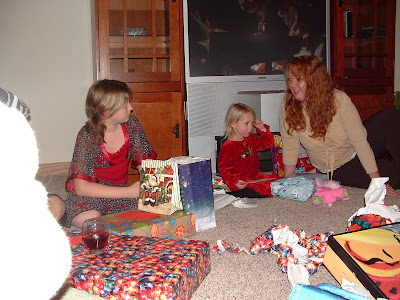
Jana-- I found some pictures of Ava (she's in the background on most of them. She was teething and kind of hard to catch on camera.) Also, check out the huge beaver throw on my sisters couch. You can click on the pictures for a larger view.






Friday, December 22, 2006

Jordes,
I’m two weeks into my new gig as an Industrial Broker at Colliers International. Finally got my dream job and am having a great time learning the ropes. There was a little clipping from Finance & Commerce about my hire and there is a pending advertisement in the Business Journal. Fancy. Look forward to seeing you all on Christmas or whenever it is we see each other.
Happy Holidays,
Jeffrey Pearson
Colliers Turley Martin Tucker
200 South Sixth Street, Suite 1400
Minneapolis, MN 55402
Phone: (612) 347-9394
Fax: (612) 347-9389
E-mail: jpearson@ctmt.com
_________________________________________
Industrial broker joins Colliers Turley Martin Tucker
By , F&C Staff Report
December 21, 2006
The Twin Cities office of Colliers Turley Martin Tucker has hired... Jeffrey Pearson as a junior industrial broker. He will join the industrial team of Josh Huempfner and Duane Poppe.
Pearson has a bachelor’s degree from the University of Wisconsin-Madison in real estate and urban land economics and in marketing. He previously assisted industrial and mortgage brokers in the research department of NAI Welsh.
Prior to that position, he spent two years with the Peace Corps in the Kyrgyz Republic, where he worked with a national snow leopard reserve, local schools and community organizations.
St. Louis-based Colliers Turley Martin Tucker handles more than $4 billion in annual real estate transactions and manages more than 140 million square feet of industrial, office, multi-family and retail space.
Wednesday, December 20, 2006
Educators, Parents Eager for an Edge Opt for IB Classes In Grade Schools
By Ian Shapira
Washington Post Staff Writer
Sunday, December 17, 2006; Page A01
Hunting for the best education for her three young children, Traci Pietra fretted about low test scores at her Arlington neighborhood school. Then the principal told her about Randolph Elementary's affiliation with one of the most prestigious and rapidly growing brands in education: IB.
International Baccalaureate is best known for... a high school diploma program geared to the university-bound academic elite. But Pietra and her husband, Peter, were sold on the lesser-known elementary version of IB. Both were attracted to the IB emphasis on global understanding, Pietra said, and added: "He was like, 'Our kids are going to an Ivy League school, and we need an education that's going to get them on the right track.' "
The Primary Years Programme, designed by the Geneva-based International Baccalaureate Organization, is becoming a hit in the United States with the Judy Blume and Beverly Cleary set. It's now in 72 U.S. schools, up from six in 2000. Driving the growth is a desire among education officials to ramp up the rigor, the earlier the better.
The program seeks to mold students, from preschool age on, into "transdisciplinary" and bilingual scholars who can deliver a major academic project by fifth grade and then move into deeper studies in secondary schools and beyond. (IB middle schools also exist.) Critics wonder whether it's all a bit much for a student demographic that still receives scratch-and-sniff stickers on written work.
"We initially hear from parents that they're a little worried about the amount of work," said Sandra Coyle, a regional marketing and communications manager for the IB organization. "But they do realize the way it expands their children's minds and teaches them how to learn and how it helps them to manage their schedules. We like to say that IB prepares kids for success in college but also for success in life."
So far, Randolph Elementary and the private Washington International and Rock Creek International schools in the District are the only ones in the region with authorized IB primary programs. But efforts to join them are underway in several local school systems. Prince William County is training staff for an IB rollout in eight elementary schools. Plans are made for five such schools in the District and three in Anne Arundel County. And an IB elementary awaits authorization in Montgomery County.
For some schools with a sizable number of students from low-income families, IB's cachet helps lure -- and retain -- children whose parents are better off. At Ellis Elementary School, one of the chosen few in Prince William to get the IB program, transfer requests are trickling in. "We've already fielded a few phone calls, and most of them were from higher socioeconomic areas," Principal Jewell Moore said. At her school, 40 percent of students are considered economically disadvantaged.
IB elementary classes differ from the ordinary in several ways. Subjects as varied as economics and nonfiction writing can be taught in a single IB class. When students begin learning new material, they are asked to think of numerous questions that get posted on the chalkboard under a title such as "What we want to find out," giving classes an investigative feel.
"In the past, when students asked questions, they just mimicked mine," said Randolph science teacher Judith Kendall. "With IB, they have to think about what they know and what they really don't know."
Teachers at IB schools, who receive special training, say the elementary program will help ensure that students will be able to compete globally and learn from an early age about the importance of other cultures. They also say that the programs can help students pass standardized state exams, especially in the many elementary schools serving low-income areas that face the threat of sanctions under the No Child Left Behind law if test scores fall short.
A Washington Post review of nearly all authorized IB public elementary schools in the country found that three-fourths made adequate yearly progress under the federal law, based on the last academic year's test results. Further, more than two-thirds of the IB schools designated for federal Title I anti-poverty funding made adequate yearly progress.
The IB primary program uses an approach that teaches students several disciplines in classes organized by six units: "Who we are," "Where we are in place and time," "How we express ourselves," "How the world works," "How we organize ourselves" and "Sharing the planet." Unlike the high school diploma program, there are no year-end exams, but fifth-graders complete a culminating "exhibition" that can be a performance, a community service project or another endeavor in which portfolios are turned in periodically. Students also must study a foreign language.
School systems that sign on -- and pay to the tune of nearly $10,000 for each of their schools to apply for the IB organization's authorization -- are not hesitant about embedding the branding into their subculture. At Randolph, for instance, students every morning sing a very multisyllabic anthem that begins like this: "I am a star, a Randolph star. I am a curious and inquiring International Baccalaureate student."
Students buy into the program eagerly. "It looks good on your primary records, and then they will probably put you on another level to get you smarter," said Asia Winkler, 10, a Randolph fifth-grader.
At Randolph, which finally met academic standards this year after test scores rose, IB dominates the school's mind-set. With world maps on the walls and several clocks set to various international time zones, the school is festooned with IB ornamentation. Essays interpret the meaning of being an IB student, and flashcards feature IB Learner Profile words -- risk-taking, communicative, well-balanced, inquiring and so on -- that students must incorporate into their behavior.
Fifth-graders are even anointed by their classmates to be members of the IB Council, which works with school staff to help select their graduating exhibition project.
One recent day, in a science class studying "How the world works," third-grade teacher Judith Kendall urged her students to ask questions on a broad level.
"Let's review the questions that inquirers like to use," Kendall said during a lesson on motion. "Let's read them together: What is it like? How does it work? Why is it the way it is? How is it connected to other things?"
Afterward, one student asked: What else makes things move or stop?
"I had the same kind of question. Is there any other kind of force?" asked Nieve Schimley, 9.
So what's in store for these kids when they get to a high school IB program? When they have to take college-level classes in science, math and a foreign language? When they have to sit for a battery of oral and written tests that can last three weeks? When they have to write a 4,000-word research paper, on, say, cortisol levels in mood-disorder subjects?
"What I'd say to a 10-year-old," said Sebastien Davis-Vangelder, 17, a senior in the IB program at Fairfax County's George C. Marshall High School, "is that it's not going to get any easier."
Washington Post Staff Writer
Sunday, December 17, 2006; Page A01
Hunting for the best education for her three young children, Traci Pietra fretted about low test scores at her Arlington neighborhood school. Then the principal told her about Randolph Elementary's affiliation with one of the most prestigious and rapidly growing brands in education: IB.
International Baccalaureate is best known for... a high school diploma program geared to the university-bound academic elite. But Pietra and her husband, Peter, were sold on the lesser-known elementary version of IB. Both were attracted to the IB emphasis on global understanding, Pietra said, and added: "He was like, 'Our kids are going to an Ivy League school, and we need an education that's going to get them on the right track.' "
The Primary Years Programme, designed by the Geneva-based International Baccalaureate Organization, is becoming a hit in the United States with the Judy Blume and Beverly Cleary set. It's now in 72 U.S. schools, up from six in 2000. Driving the growth is a desire among education officials to ramp up the rigor, the earlier the better.
The program seeks to mold students, from preschool age on, into "transdisciplinary" and bilingual scholars who can deliver a major academic project by fifth grade and then move into deeper studies in secondary schools and beyond. (IB middle schools also exist.) Critics wonder whether it's all a bit much for a student demographic that still receives scratch-and-sniff stickers on written work.
"We initially hear from parents that they're a little worried about the amount of work," said Sandra Coyle, a regional marketing and communications manager for the IB organization. "But they do realize the way it expands their children's minds and teaches them how to learn and how it helps them to manage their schedules. We like to say that IB prepares kids for success in college but also for success in life."
So far, Randolph Elementary and the private Washington International and Rock Creek International schools in the District are the only ones in the region with authorized IB primary programs. But efforts to join them are underway in several local school systems. Prince William County is training staff for an IB rollout in eight elementary schools. Plans are made for five such schools in the District and three in Anne Arundel County. And an IB elementary awaits authorization in Montgomery County.
For some schools with a sizable number of students from low-income families, IB's cachet helps lure -- and retain -- children whose parents are better off. At Ellis Elementary School, one of the chosen few in Prince William to get the IB program, transfer requests are trickling in. "We've already fielded a few phone calls, and most of them were from higher socioeconomic areas," Principal Jewell Moore said. At her school, 40 percent of students are considered economically disadvantaged.
IB elementary classes differ from the ordinary in several ways. Subjects as varied as economics and nonfiction writing can be taught in a single IB class. When students begin learning new material, they are asked to think of numerous questions that get posted on the chalkboard under a title such as "What we want to find out," giving classes an investigative feel.
"In the past, when students asked questions, they just mimicked mine," said Randolph science teacher Judith Kendall. "With IB, they have to think about what they know and what they really don't know."
Teachers at IB schools, who receive special training, say the elementary program will help ensure that students will be able to compete globally and learn from an early age about the importance of other cultures. They also say that the programs can help students pass standardized state exams, especially in the many elementary schools serving low-income areas that face the threat of sanctions under the No Child Left Behind law if test scores fall short.
A Washington Post review of nearly all authorized IB public elementary schools in the country found that three-fourths made adequate yearly progress under the federal law, based on the last academic year's test results. Further, more than two-thirds of the IB schools designated for federal Title I anti-poverty funding made adequate yearly progress.
The IB primary program uses an approach that teaches students several disciplines in classes organized by six units: "Who we are," "Where we are in place and time," "How we express ourselves," "How the world works," "How we organize ourselves" and "Sharing the planet." Unlike the high school diploma program, there are no year-end exams, but fifth-graders complete a culminating "exhibition" that can be a performance, a community service project or another endeavor in which portfolios are turned in periodically. Students also must study a foreign language.
School systems that sign on -- and pay to the tune of nearly $10,000 for each of their schools to apply for the IB organization's authorization -- are not hesitant about embedding the branding into their subculture. At Randolph, for instance, students every morning sing a very multisyllabic anthem that begins like this: "I am a star, a Randolph star. I am a curious and inquiring International Baccalaureate student."
Students buy into the program eagerly. "It looks good on your primary records, and then they will probably put you on another level to get you smarter," said Asia Winkler, 10, a Randolph fifth-grader.
At Randolph, which finally met academic standards this year after test scores rose, IB dominates the school's mind-set. With world maps on the walls and several clocks set to various international time zones, the school is festooned with IB ornamentation. Essays interpret the meaning of being an IB student, and flashcards feature IB Learner Profile words -- risk-taking, communicative, well-balanced, inquiring and so on -- that students must incorporate into their behavior.
Fifth-graders are even anointed by their classmates to be members of the IB Council, which works with school staff to help select their graduating exhibition project.
One recent day, in a science class studying "How the world works," third-grade teacher Judith Kendall urged her students to ask questions on a broad level.
"Let's review the questions that inquirers like to use," Kendall said during a lesson on motion. "Let's read them together: What is it like? How does it work? Why is it the way it is? How is it connected to other things?"
Afterward, one student asked: What else makes things move or stop?
"I had the same kind of question. Is there any other kind of force?" asked Nieve Schimley, 9.
So what's in store for these kids when they get to a high school IB program? When they have to take college-level classes in science, math and a foreign language? When they have to sit for a battery of oral and written tests that can last three weeks? When they have to write a 4,000-word research paper, on, say, cortisol levels in mood-disorder subjects?
"What I'd say to a 10-year-old," said Sebastien Davis-Vangelder, 17, a senior in the IB program at Fairfax County's George C. Marshall High School, "is that it's not going to get any easier."
Tuesday, December 19, 2006
2 effective Methods for bathing a CAT
First Method
1. Thoroughly clean the toilet.
2. Add the required amount of shampoo to the toilet water, and have both lids lifted.
3. Obtain the cat and soothe him while you carry him towards the bathroom.
4. In one smooth movement, put the cat in the toilet and close both lids (you may need to stand on the lid so that he cannot escape).
CAUTION: Do not get any part of your body too close to the edge, as his paws will be reaching out for any
purchase they can find.
5. Flush the toilet three or four times. This provides a 'power wash and rinse' which I have found to be quite effective.
6. Have someone open the door to the outside and ensure that there are no people between the toilet and the outside door.
7. Stand behind the toilet as far as you can, and quickly lift both lids.
8. The now-clean cat will rocket out of the toilet, and run outside where he will dry himself.
________________________________________________________________________________
Second Method
1. Know that although the kitty cat has... the advantage of quickness and lack of concern for human life, you have the advantage of strength. Capitalize on that advantage by selecting the battlefield. Don't try to bathe him in an open area where he can force you to chase him. Pick a very small bathroom. If your bathroom is more than four feet square, we recommend that you get in the tub with the cat and close the sliding-glass doors as if you were about to take a shower. (A simple shower curtain will not do. A berserk cat can shred a three-ply rubber shower curtain quicker than a politician can shift positions.)
2. Know that a cat has claws and will not hesitate to remove all the skin from your body. Your advantage here is that you are smart and know how to dress to protect yourself. We recommend canvas overalls tucked into high-top construction boots, a pair of steel-mesh gloves, an army helmet, a hockey face-mask, and a long-sleeved flak jacket.
3. Use the element of surprise. Pick up your cat nonchalantly, as if to simply carry him to his supper dish. (Cats will not usually notice your strange attire. They have little or no interest in fashion as a rule.)
4. Once you are inside the bathroom, speed is essential to survival. In a single liquid motion, shut the bathroom door, step into the tub enclosure, slide the glass door shut, dip the cat in the water and squirt him with shampoo. You have now begun one of the wildest 45 seconds of your life.
5. Cats have no handles. Add the fact that he now has soapy fur, and the problem is radically compounded. Do not expect to hold on to him for more than two or three seconds at a time. When you have him, however, you must remember to give him another squirt of shampoo and rub like crazy. He'll then spring free and fall back into the water, thereby rinsing himself off. (The national record for cats is three latherings, so don't expect too much.)
6. Next, the cat must be dried. Novice cat bathers always assume this part will be the most difficult, for humans generally are worn out at this point and the cat is just getting really determined. In fact, the drying is simple compared with what you have just been through. That's because by now the cat is semi-permanently affixed to your right leg.
7. You simply pop the drain plug with your foot, reach for your towel and wait. (Occasionally, however, the cat will end up clinging to the top of your army helmet. If this happens, the best thing you can do is to shake him loose and to encourage him toward your leg.) After all the water is drained from the tub, it is a simple matter to just reach down and dry the cat.
In a few days the cat will relax enough to be removed from your leg. He will usually have nothing to say for about three weeks and will spend a lot of time sitting with his back to you. He might even become psychoceramic and develop the fixed stare of a plaster figurine.
You will be tempted to assume he is angry. This isn't usually the case. As a rule he is simply plotting ways to get through your defenses and injure you for life the next time you decide to give him a bath. But at least now he smells a lot better.
1. Thoroughly clean the toilet.
2. Add the required amount of shampoo to the toilet water, and have both lids lifted.
3. Obtain the cat and soothe him while you carry him towards the bathroom.
4. In one smooth movement, put the cat in the toilet and close both lids (you may need to stand on the lid so that he cannot escape).
CAUTION: Do not get any part of your body too close to the edge, as his paws will be reaching out for any
purchase they can find.
5. Flush the toilet three or four times. This provides a 'power wash and rinse' which I have found to be quite effective.
6. Have someone open the door to the outside and ensure that there are no people between the toilet and the outside door.
7. Stand behind the toilet as far as you can, and quickly lift both lids.
8. The now-clean cat will rocket out of the toilet, and run outside where he will dry himself.
________________________________________________________________________________
Second Method
1. Know that although the kitty cat has... the advantage of quickness and lack of concern for human life, you have the advantage of strength. Capitalize on that advantage by selecting the battlefield. Don't try to bathe him in an open area where he can force you to chase him. Pick a very small bathroom. If your bathroom is more than four feet square, we recommend that you get in the tub with the cat and close the sliding-glass doors as if you were about to take a shower. (A simple shower curtain will not do. A berserk cat can shred a three-ply rubber shower curtain quicker than a politician can shift positions.)
2. Know that a cat has claws and will not hesitate to remove all the skin from your body. Your advantage here is that you are smart and know how to dress to protect yourself. We recommend canvas overalls tucked into high-top construction boots, a pair of steel-mesh gloves, an army helmet, a hockey face-mask, and a long-sleeved flak jacket.
3. Use the element of surprise. Pick up your cat nonchalantly, as if to simply carry him to his supper dish. (Cats will not usually notice your strange attire. They have little or no interest in fashion as a rule.)
4. Once you are inside the bathroom, speed is essential to survival. In a single liquid motion, shut the bathroom door, step into the tub enclosure, slide the glass door shut, dip the cat in the water and squirt him with shampoo. You have now begun one of the wildest 45 seconds of your life.
5. Cats have no handles. Add the fact that he now has soapy fur, and the problem is radically compounded. Do not expect to hold on to him for more than two or three seconds at a time. When you have him, however, you must remember to give him another squirt of shampoo and rub like crazy. He'll then spring free and fall back into the water, thereby rinsing himself off. (The national record for cats is three latherings, so don't expect too much.)
6. Next, the cat must be dried. Novice cat bathers always assume this part will be the most difficult, for humans generally are worn out at this point and the cat is just getting really determined. In fact, the drying is simple compared with what you have just been through. That's because by now the cat is semi-permanently affixed to your right leg.
7. You simply pop the drain plug with your foot, reach for your towel and wait. (Occasionally, however, the cat will end up clinging to the top of your army helmet. If this happens, the best thing you can do is to shake him loose and to encourage him toward your leg.) After all the water is drained from the tub, it is a simple matter to just reach down and dry the cat.
In a few days the cat will relax enough to be removed from your leg. He will usually have nothing to say for about three weeks and will spend a lot of time sitting with his back to you. He might even become psychoceramic and develop the fixed stare of a plaster figurine.
You will be tempted to assume he is angry. This isn't usually the case. As a rule he is simply plotting ways to get through your defenses and injure you for life the next time you decide to give him a bath. But at least now he smells a lot better.
Kyrgyzstan Cabinet resigns office

Mr Kulov (left) has tendered
his resignation to President Bakiyev
Kyrgyz President Kurmanbek Bakiyev has accepted the resignation of his Cabinet, amid a continuing stand-off between him and parliament.
Prime Minister Felix Kulov, who tendered the resignation, said it should allow parliamentary elections due in 2010 to be held sooner.
The move follows continued wrangling between the government and legislature, despite a deal on a new constitution.
Mr Kulov's deputy says the two... bodies are no longer able to work together.
Kyrgyzstan witnessed major protests in November which prompted Mr Bakiyev to agree to a new constitution that saw him giving up some powers.
Difficulties
Mr Kulov said he had tendered his resignation to speed up the transition to a new parliament and government.
"By our move we are trying to speed up new parliamentary elections. This is a way out of a crisis and a way to intensify the democratic process," he told reporters.
The new constitution was signed on 9 November by President Bakiyev, following a week of protests in the capital Bishkek.
Thousands of opposition supporters set up tents in the main square and refused to leave until President Bakiyev resigned or brought in constitutional reform.
They accused the president of reneging on his promise to introduce reforms when he overthrew Askar Akayev in the so-called Tulip Revolution in 2005.
The new constitution allows parliament, not the president, to form a government.
However, under November's deal, it was agreed that the current government should remain in place until 2010.
But if the government resigns and parliament cannot approve its successor, new elections have to be called.
Mr Kulov and his ally Mr Bakiyev may be hoping they can win the elections and work with a less hostile legislature.
Friday, December 15, 2006
Fun Facts to Know and Tell
1. The name Lego came from two Danish words "leg godt", meaning "play well". It also means "I put together" in Latin.
2. You're 10 times more likely to be bitten by a human than a rat.
3. The hotter it is, the more difficult it is for planes to take off. Air passengers in Nevada, where temperatures have reached 120F, have been told they can't fly.
4. Giant squid eat each other - especially during sex.
5. A single "mother" spud from southern Peru gave rise to all the varieties of potato eaten today, scientists have learned.
6. You are 176 times more likely to be murdered than to win the Lottery.
7. Musical instrument shops, in the U.K., must pay an annual royalty to cover shoppers who perform a recognizable riff before they buy, thereby making a "public performance".
2. You're 10 times more likely to be bitten by a human than a rat.
3. The hotter it is, the more difficult it is for planes to take off. Air passengers in Nevada, where temperatures have reached 120F, have been told they can't fly.
4. Giant squid eat each other - especially during sex.
5. A single "mother" spud from southern Peru gave rise to all the varieties of potato eaten today, scientists have learned.
6. You are 176 times more likely to be murdered than to win the Lottery.
7. Musical instrument shops, in the U.K., must pay an annual royalty to cover shoppers who perform a recognizable riff before they buy, thereby making a "public performance".
Subscribe to:
Posts (Atom)